Showing posts with label Cognitive Load Theory. Show all posts

Thursday, 19 March 2026

Less Is More: Designing Lessons That Boost Learner Understanding

By Sayef Khan


“Our goal isn’t to dumb down - it’s to make thinking easier to direct”


How long can we realistically expect our students to concentrate in a world of constant notifications, scrolling feeds, and endless digital distractions? 


Attention spans are often described as shrinking, but what we see in classrooms is not a lack of ability to think; it is a struggle to focus when too much competes for limited working memory. This is where Cognitive Load Theory becomes so powerful in shaping effective teaching. Originally developed by John Sweller, Cognitive Load Theory reminds us that working memory is limited. When students are presented with too much information, confusing instructions, or cluttered materials, their mental resources become overwhelmed.


Last term, the Business and Enterprise department paused to reflect on a deceptively simple question: How much content are we actually putting on our lesson slides? What began as a routine discussion quickly became a moment of honest professional reflection. When we looked carefully at our curriculum materials, it became clear that many of our slides were carrying far more information than our students’ working memories could realistically manage. In our effort to be thorough, we had unintentionally made thinking harder to direct.


This realisation brought us back to John Sweller’s Cognitive Load Theory and, in particular, the concept of reducing extraneous load. Extraneous load refers to the unnecessary mental effort caused not by the complexity of the subject itself, but by the way information is presented. Dense text, multiple fonts, unclear instructions, excessive bullet points, and cluttered visuals all compete for attention. Instead of focusing on analysing a balance sheet or evaluating a marketing strategy, students are first forced to decode the slide in front of them. Have a look at an example below: 


What’s the difference between the before and after slide?

  1. Clearer layout and spacing – text is less crowded and easier to read

  2. Simpler design – removes unnecessary images (e.g. video thumbnail, van photo)

  3. More focused visuals – single burger icon supports the context clearly

  4. Improved heading structure – “Think/Write/Pair/Share” is clearly separated

  5. Better emphasis – key words (Aim, Objective, Activities, Task) stand out more

  6. More concise wording – less clutter makes the task clearer


When students understand what they are being asked to do, they are more likely to participate, take ownership of their learning, and experience success.


Reducing extraneous load is especially impactful for SEND students. Many learners with additional needs can be disproportionately affected by cluttered visuals, lengthy instructions, or poorly structured tasks. Simplified layouts, chunked information, consistent formatting, and clear modelling reduce cognitive overload and support processing. These adjustments are not “extra support” for a few; they are inclusive strategies that improve accessibility for all learners.


Ultimately, reducing extraneous load is not about making lessons look simpler; it is about making learning more powerful. When we remove distractions and present information with clarity and purpose, we give every student, regardless of ability, the cognitive space to think, understand, and thrive.


So next time you are planning a lesson, pause and ask yourself: Is this helping students think about the content, or is it making them work hard just to access it?


Further reading: 

https://educationendowmentfoundation.org.uk/news/eef-blog-cognitive-clutter-and-better-understanding-barriers-to-learning 

https://set.et-foundation.co.uk/resources/the-importance-of-cognitive-load-theory 


Tuesday, 3 June 2025

“But I don’t know what to do!” - reducing cognitive overload

By Michelle Chen


Picture this: 

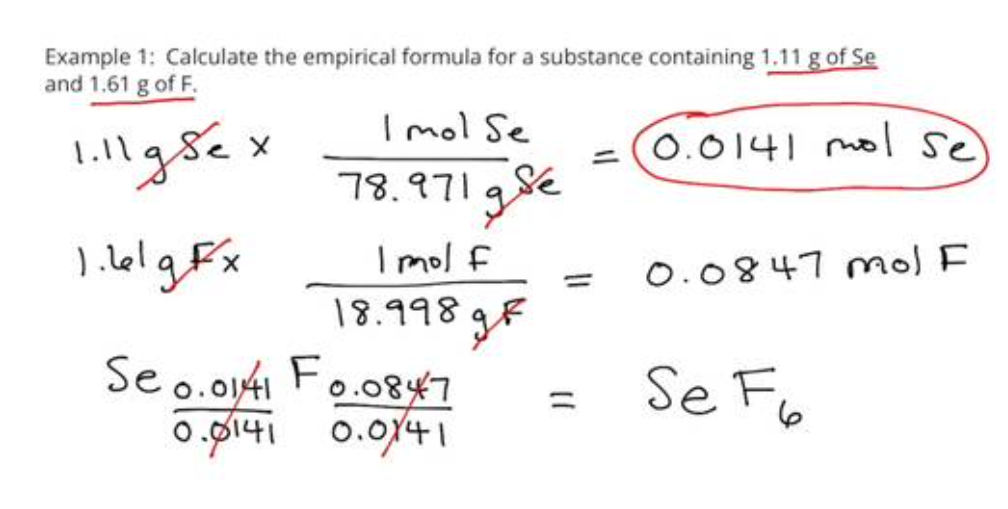
Sarah is in Science, struggling to understand the task she is supposed to be doing. She tried to listen to her teacher’s explanation, but couldn’t remember what the empirical formula is or how to calculate it. 


So, she has lost track of time, and halfway through the explanation, the diagram has now been replaced by a timer. The worksheet is in front of her, filled with questions, paragraphs of text to read and some diagrams. Sarah does not know where to look and feels like giving up. 


Does this scenario sound familiar to you?


It is a common classroom experience that many students may struggle with. However, for Sarah, there may be more underlying barriers that their peers do not have. I recently read an article from the Education Endowment Foundation (EEF) about cognitive load theory that can help us understand the barriers that pupils may be facing. 


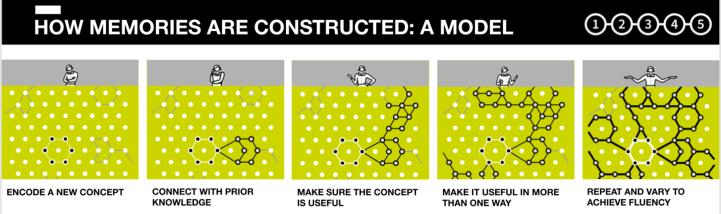
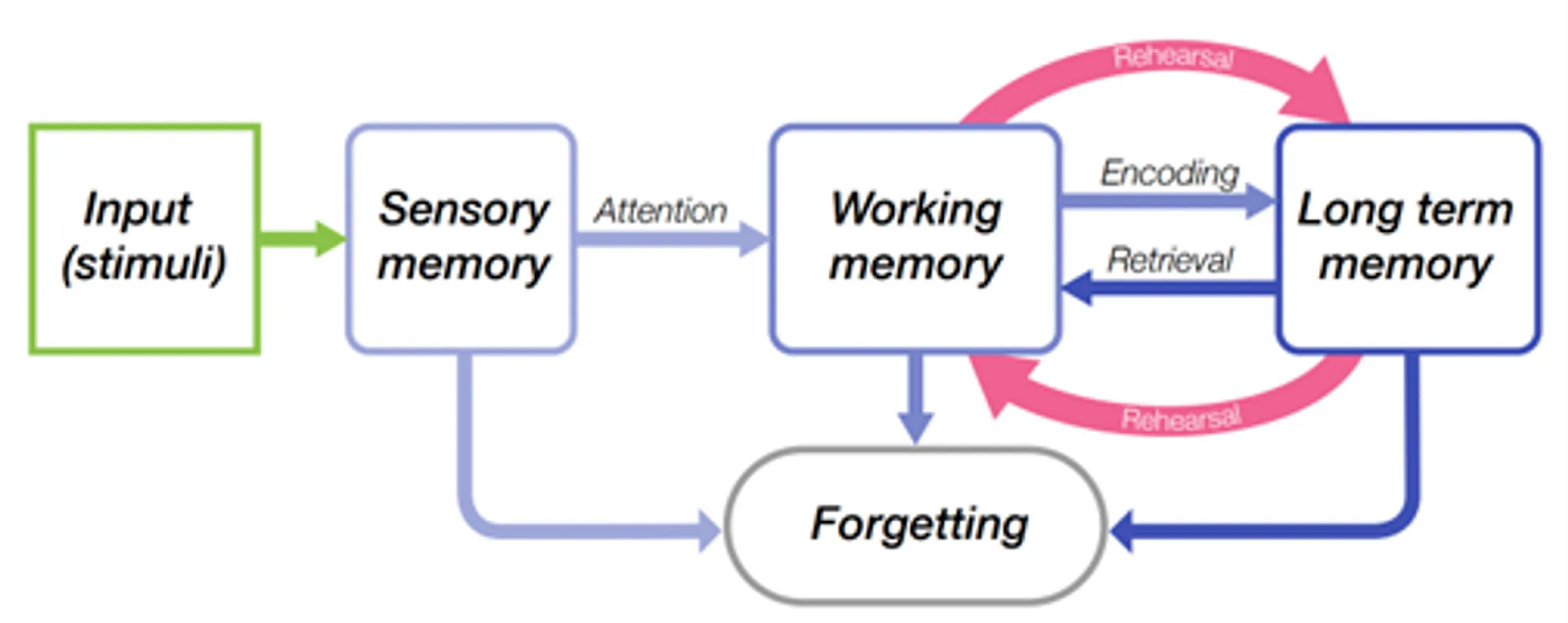
Cognitive load theory is primarily concerned with how information is efficiently and effectively encoded into learners’ long-term memory. For education, cognitive load theory refers to how teachers can manage and process tasks to significantly improve learning and memory. 


How memories are constructed: 


Here are a few cognitive science principles from could help teachers refine their teaching practice: 

  • Supporting Sarah to remember key prior learning 

  • Helping Sarah understand the explanation of the new content 

  • Supporting Sarah to fully access the task they have been given 


How to apply cognitive load theory principles to improve learning outcomes: 


  1. Spaced learning: 

Distributing learning and retrieval opportunities over a longer period rather than concentrating them in ‘massed practice’. For example, spacing the concept across days or lessons, and spacing within a lesson. 


  1. Retrieval practice

Using a variety of strategies to recall information from memory, for example, flash cards, practice tests or quizzing, or mind mapping. The hurdle Sarah faced was retrieving the key term that was previously taught, she couldn’t remember the definition of empirical formula. 

Regularly retrieving and checking understanding of core concepts throughout a topic or lesson can strengthen the memory of the information. 


  1. Manage cognitive load

A key challenge for educators is that working memory is limited.  


Three practices that can help teachers manage cognitive load are: 

  1. Using worked examples to support learners in applying and developing knowledge. 

  2. Provide scaffolding and other forms of support, such as prompts or targeted instructions, to help learners navigate the working memory demands of tasks 

  3. Using collaboration between pupils so that they can share the demands of problem-solving tasks 


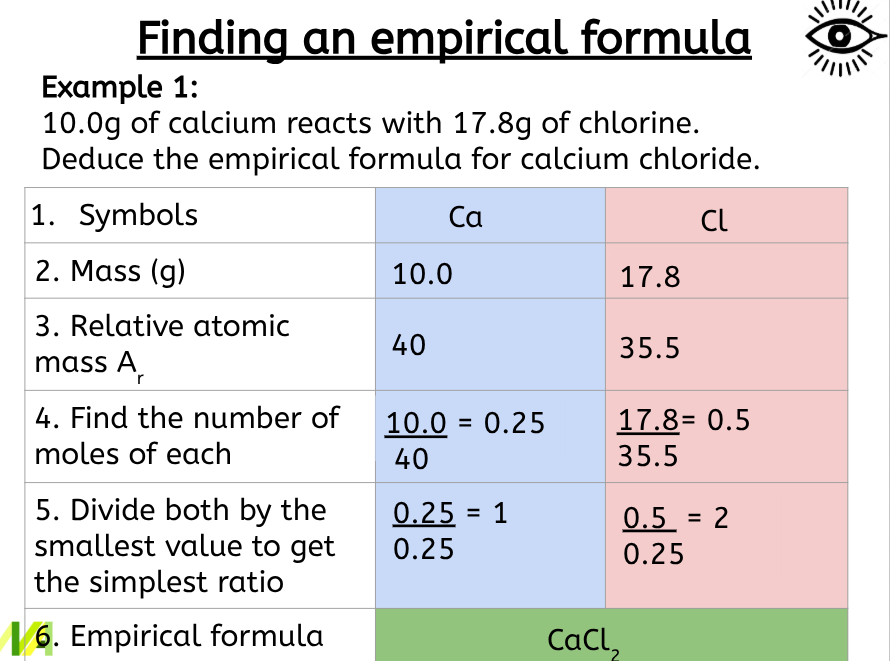
For example, when calculating the empirical formula. I demonstrate how to organise the information in a question within a grid format. This breaks down the steps involved in the overall calculation, helping to ensure pupils complete each step in the correct order. I always model how to use the grid correctly when teaching it to my students. 


  1. Dual coding 

Using both verbal and non-verbal information (such as words and pictures) to teach concepts, dual coding forms one part of a wider theory known as the cognitive theory of multimedia learning (CTML) 


Reflection Questions:

  • What strategies do you use for reducing cognitive load?

  • How do you ensure challenge is not taken away as a means of reducing cognitive load?


References: 

Ayres, P. and Paas, F., 2012. Cognitive load theory: New directions and challenges. Applied Cognitive Psychology, 26(6), pp.827-832.


Clark, R.C., Nguyen, F. and Sweller, J., 2011. Efficiency in learning: Evidence-based guidelines to manage cognitive load. John Wiley & Sons.


Perry, T., Lea, R., Jørgensen, C. R., Cordingley, P., Shapiro, K., & Youdell, D. (2021). Cognitive Science in the Classroom. London: Education Endowment Foundation (EEF).


Friday, 20 November 2020

Bitesize Research: Cognitive Load Theory

By Conor Nesbitt

This week, we wanted to share with you the report from the New South Wales, Australia Centre for Education Statistics and Evaluation on cognitive load that we’ve been reading in the WA Thinking Teachers group.

Objectives of study: To outline the key principles of cognitive load theory, and explain how the impact this may have on teachers.


Summary of findings:  

  • Cognitive Load Theory is well founded on current research that shows two things about how we learn: (1) the amount of new knowledge we can learn (called our working memory) is limited and (2) how much of our stored or long term memory we can use at any one time is potentially limitless. 

  • We store our long term memory in ‘schemas’. When completing tasks we use ‘schemas’ to reduce our cognitive loading (e.g. have you ever driven home and realised you can’t recall how you got there? -- this is our schema at work). 

  • Teachers can help reduce cognitive load to help support students move learning from working memory to stored memory by reducing demand on working memory. 

  • In order to stop cognitive overload teachers need to find the balance between too much challenge and too little that student attention is lost on other things. Incorporating “I do, we do, you do” modelling activities is effective in reducing extraneous loading. 

  • Teachers should try to reduce students’ extraneous load by limiting the use of dual information streams (e.g. asking students to read and listen at the same time). Instead teachers could use dual-coding to support explanation. 


How does this impact me and my practice?: Some reflection questions arising from this that might be helpful to consider are: 


  • How can we reduce extraneous load by reducing unnecessary and complicated tasks? (e.g. printing tasks on the same piece of paper, developing a clear success criteria for all writing in your subject). 

  • How could you incorporate using “I, we, you do” modelling strategies when introducing new tasks to reduce cognitive load (especially in maths and science)? 

  • How will you ensure that there is a release of responsibility to ensure cognitive demands aren’t too low? 

  • How do we plan to incorporate retrieval and spacing to ensure students are using their stored memory in order to reduce demands on working memory?


A recording of the Thinking Teachers Group discussing this research can be found here:


If anyone would like to discuss this further with me - please comment below! I’d be delighted to open up these discussions and conversations.