Showing posts with label Reading. Show all posts

Sunday, 30 November 2025

Exciting times in WA’s world of Literacy!

By Shafia Matin


Introductions:

I’d like to take a moment to introduce myself, colleagues involved in literacy education at WA and the work we do. I’m Shafia Matin, the new Literacy Coordinator, and I work across the school to develop, embed and support the literacy curriculum. Our colleague, Nsia Sealey-Griffiths, from the Inclusion team, has been meeting with Year 8 and Year 9 students to continue building on their progress with their reading and comprehension. She will be using an award winning phonics and reading programme from ‘That Reading Thing’ to devise and deliver sessions for identified students, across year groups. I look forward to updating you on how these interventions develop and, importantly, how quickly our students are developing into confident/more independent readers. Our librarian, Michael Bello, is rejuvenating the library with new stock - including recommendations from staff and students - and is actively working to organise the library as an effective and multi-functional learning hub that is inviting for all members of our school community.


What Literacy looks like at WA:

All KS3 students have a library lesson per fortnight. In this lesson, they read for pleasure; some read guided, with the teacher and/or LSA, whilst others continue to read independently - benefitting from Michael Bello’s excellent recommendations as librarian. I am very pleased to share that requests in the library have gone up! We are due to receive lots of new books in the library this term and next… It’s brilliant that students are widening their reading and actively engaging in their own progress by asking for novels, graphic novels and non fiction. Furthermore, I am delighted to share with you that term 2 has seen the launch of guided reading with form tutors in KS3 and literacy support - writing CV’s and applications - in KS4. Our Sixth Formers are being thought of, too! Academic Literacy, to polish essay writing and evaluation, is now on offer as an enrichment on Tuesdays. 


Embedding into the curriculum - the role of the Literacy Coordinator:

As coordinator, it’s my job to inspire and encourage within the curriculum - developing library lessons that adapt to support and stretch students and, ultimately, contribute to students becoming readers for life! I will continue to work with departments and the Inclusion team to develop strands that come together for overall success. One to one reading and phonics will begin to address needs and even close gaps; we will be adapting term on term - evaluating and developing pedagogy - to build a curriculum that, over time, will allow progress for all.  


What the future holds:

Whilst there is a challenging path to navigate, we are excited about what we have started and will go on to build. At WA, we have vision and energy; it is truly wonderful to already hear about “purposeful library lessons” (English reviewer, November 2025), to have so many students recommending books and to recognise the work in individual departments - everything from subject specific vocab and spelling, oracy tasks and live marking codes. We are building appreciation and skills for life! All our efforts, as a team and community, are empowering; we recognise the value of a whole school literacy curriculum and can’t wait to hold future events to celebrate our progress and success. Watch this space! 

Monday, 16 June 2025

The joy of making curriculum choices in English

By Seb Collett

Being the Director of Learning for English, I firmly believe I have the most interesting job in the school, and part of that is due to the selection of texts. While for some subjects the National Curriculum makes all the decisions for you, for English the texts we hone our students’ skills on is a topic of constant discussion, so I thought it might be interesting to show you my thinking on some examples.


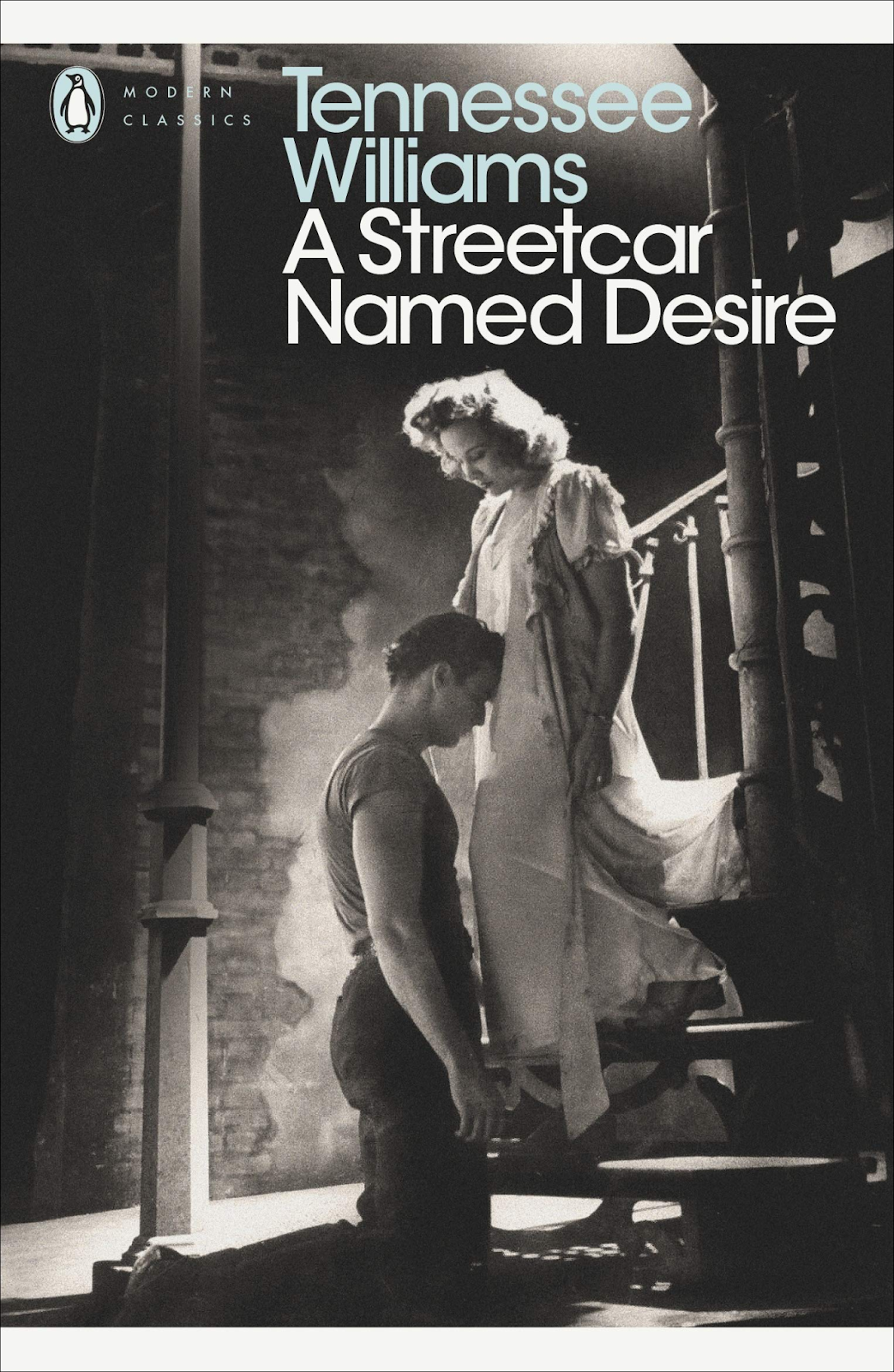
For KS5 the key word is breadth; there is a huge range of text we can choose, and all the middle leaders in English before me have come up with a fantastic curriculum, including the troubling novel The Sailor Who Fell From Grace With The Sea, the horror movie Get Out, and the graphic memoir Persepolis. Ultimately we have to think about what will bring a new vantage to our students. Due to the IB often being comparative, it is interesting to match up texts. I particularly love comparing Tennessee Williams's A Streetcar Named Desire and Things Fall Apart by Chinua Achebe. They are so thematically similar, while being created in such different epochs with radically different purposes.


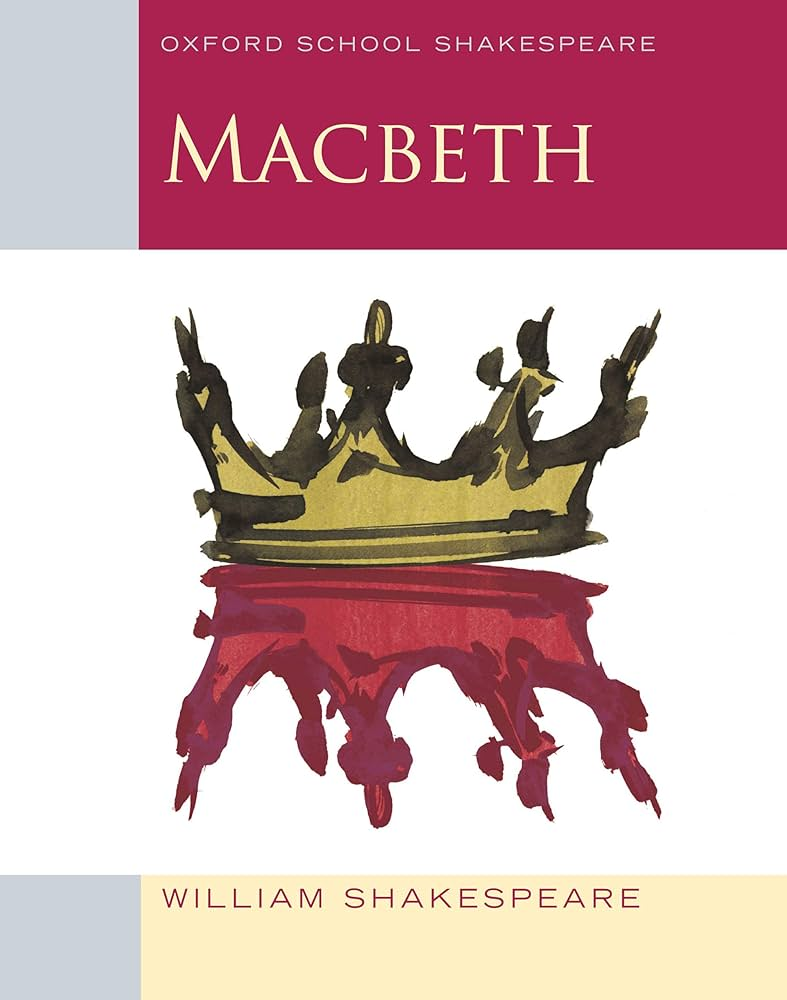
KS4 is more focused on the GCSEs, and so we have a small range of texts to choose from. And with that exam focus, we chose Macbeth over Romeo and Juliet: both are brilliant plays, but Macbeth has much stronger context to write about. An Inspector Calls also has good context, but the reason it is taught year after year is its popularity with the students. They love to argue who is most to blame for Eva’s death, and with increasing inequality in the UK, it is a text that becomes more and more relevant as time goes on.


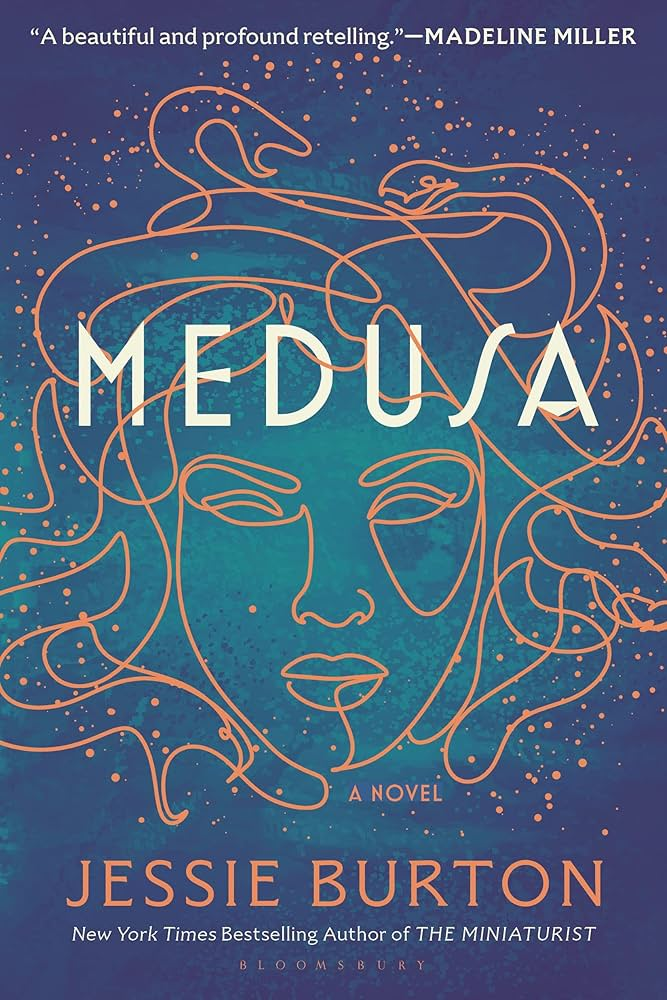
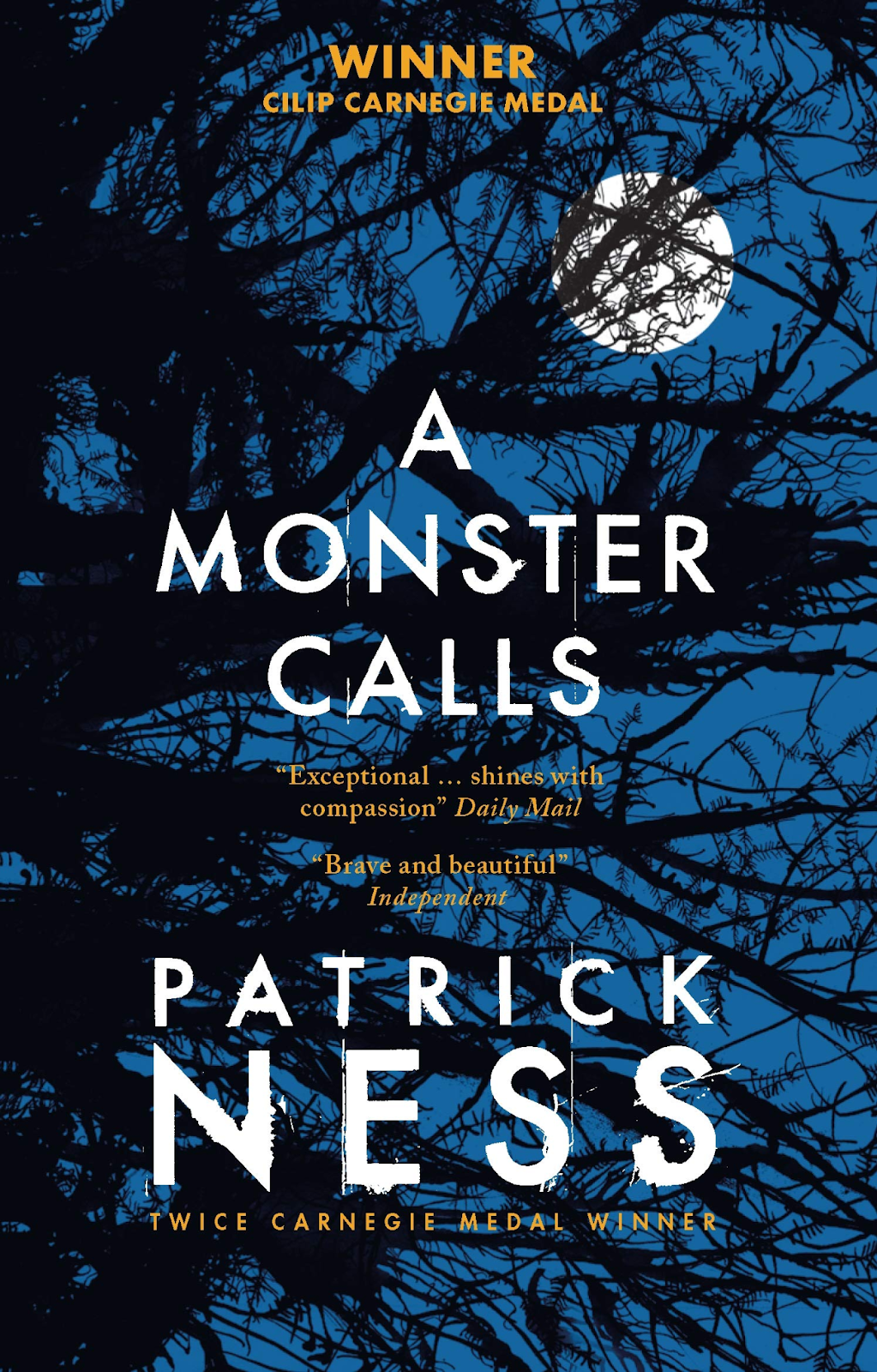
KS3 - this is where it gets fun. We have so much freedom to mix and match. For instance, we study the classic myths in a pacey, feminist retelling with Burton’s Medusa. We use A Monster Calls to explore the very challenging issues of grief. Of Mice and Men was a regular text, once a staple of the GCSEs, then when that was scrapped moved to KS3 in pretty much every school in the country. But students and teachers over the last 5 years have become more and more vocal about the unacceptability of the language. And so we replaced it with Ugly Dogs Don’t Cry, an adaptation set around Westbourne Grove, and we can invite the writer to talk to our Year 9s every year. And while A View from a Bridge has some of the best dialogue written in the English language, we replaced it with the play of Small Island, so making the same themes of immigration and forbidden love more relevant to the experiences of Londoners.

And it is not over. We are always thinking about how we will use the terribly precious resource of time to select a new text and ready it for our students. What will we choose next year? Will the unpopular A Christmas Carol get cut? What new texts will be introduced to IB Literature?

What do you feel students should be reading in school?


Tuesday, 8 March 2022

Bitesize Research: Children Owning Books

By Jaya Carrier

I hope everyone’s having a great week! Continuing our thinking about literacy and communication, and in line with forthcoming plans we have for World Book Month, I was interested to see this research summary released by the National Literacy Trust about children and book ownership. We are planning to give every child in the Academy their own book (more details to come) as part of our first-ever “WA’s Big Read” and we are excited for them to be reading and exploring these in TTBs later in T4! Objectives: To look at trends and correlations between children’s book ownership and other important measures Summary:

  • Children who own at least one book are much more likely to be engaged with reading, and six times more likely to read above their reading level
  • 6% of children in the UK don’t have a book of their own at home
  • A greater proportion of Pupil Premium children have no books at home (9.2%) compared with their non-disadvantaged peers (5.3%)
  • Ownership of books at home also correlates with reading frequency and enjoyment
How does this impact me and my practice?:

Some reflection questions arising from this that might be helpful to consider are:

  • How does this research make me reflect on my role as a teacher and as a tutor?
  • How often am I discussing reading with my tutees?
If you would like to discuss this further with me - please let me know! I’d be delighted to open up these discussions and conversations.


Wednesday, 23 February 2022

Bitesize Research: Reading For Pleasure

By Jaya Carrier

I hope everyone’s having a great week! Following the INSET day training from the National Literacy Trust, and with World Book Day fast approaching, I was keen to continue on the literacy and communication theme by looking at a literature review by Coventry University and the Book Trust on reading for pleasure. 


Objectives: To examine existing literature on reading for pleasure to determine some of the key factors that influence secondary school students’ reading for pleasure.


Summary: 

  • Reading for pleasure has been a recent focus of government strategy on reading, rather than some of the mechanisms of reading

  • Students who read for pleasure have been associated with a large number of positive outcomes both in terms of their literacy and academic grades, but also in terms of better community participation and better insights into decision-making and human nature

  • Interest in reading for pleasure has been shown to decline in the adolescent years

  • Teacher role models of reading for pleasure have been shown to have a big impact on adolescent readers. This includes discussing books, and supporting students to create their own ‘reader identities’.

  • More choice over what is available for students to read has a big impact on their reading motivation


‘How does this impact me and my practice?: Some reflection questions arising from this that might be helpful to consider are: 


  • How am I promoting and role modelling reading for pleasure in my interactions with my students and tutees?

  • How am I using tutor reading time to support reading for pleasure?

  • How can I help to nurture students’ ‘reader identities’?


If you would like to discuss this further with me - please let me know! I’d be delighted to open up these discussions and conversations. Finally, some the theme of literacy, check out a previous bitesize article on the impact of writing for student progress!

Monday, 10 January 2022

Promoting Literacy: Giving Students The Tools For Future Success

 By Donna Boam

“To be literate is to gain a voice and to participate meaningfully and assertively in decisions that affect one’s life.”

This quote, from the academic Yusuf Kassam in 1994, highlights the importance of ensuring that the children we teach are literate and have the skills and tools that they need to succeed in their lives, beyond our classroom. It has long been agreed that all teachers in a school have responsibility for the teaching of literacy; even 100 years ago it was argued that “Every teacher is a teacher of English because every teacher is a teacher in English” (Sampson, 1922). Yet in the competing demands of a school day, this explicit teaching of literacy skills can easily be pushed to one side. What are we to do? In 2019, the Education Endowment Fund (EEF) released their report, ‘Improving Literacy In Secondary Schools.’ This included 7 recommendations, namely:
  1. Prioritise ​‘disciplinary literacy’ across the curriculum
  2. Provide targeted vocabulary instruction in every subject
  3. Develop students’ ability to read complex academic texts
  4. Break down complex writing tasks
  5. Combine writing instruction with reading in every subject
  6. Provide opportunities for structured talk
  7. Provide high-quality literacy interventions for struggling students
So, which of these are you doing at present? As a school, there are some things that we are doing really well. In my lesson drop-ins, I regularly see scaffolds being given to support writing across all subjects (Recommendation 4). I regularly see students being asked to read something, to help support their own knowledge and their own writing (Recommendation 5). And I also regularly see students being asked to discuss their thoughts (Recommendation 6), although this does need to be well structured and with clear success criteria, so that students are not just discussing what they are going to have for lunch that day! In improving literacy, the big focus for us as a school will be Recommendation 1, namely prioritising ​‘disciplinary literacy’ across the curriculum. As I mentioned earlier, part of our February INSET will feature a workshop from the National Literacy Trust, focussing explicitly on this. But in the meantime… What is disciplinary literacy?
Disciplinary literacy refers to the specifics of reading, writing, and communicating in a discipline or subject area.
It helps students understand how language works in different subject areas and supports their understanding of how vocabulary is used, how question phrasing will shape the answer expected, and how to interpret the written and graphic materials used for learning.
Considering it another way, each discipline has a specialized vocabulary and components that are unique to that discipline and secondary students need to be taught what is unique about each discipline. For example, when we ask our Year 11 students to evaluate a text in their English lessons, and when we then ask them to evaluate an experiment from their Science lesson, what is required here from the students has some subject-specific nuances involved. So today, consider: What are the things that I do to help improve my students’ literacy each day? How do I teach key, subject-specific, vocabulary? What could I do better? What are some of Tier 2 and Tier 3 vocabulary that my students need to know? How do I know that they know these and can apply these in a sentence, or in a paragraph, successfully? Further reading:
  • https://www.sec-ed.co.uk/best-practice/every-teacher-is-a-teacher-of-literacy-teaching-literacy-across-the-curriculum-part-1/
  • https://educationendowmentfoundation.org.uk/education-evidence/guidance-reports/literacy-ks3-ks4
  • https://educationendowmentfoundation.org.uk/news/eef-blog-what-do-we-mean-by-disciplinary-literacy
  • https://learningspy.co.uk/literacy/closing-language-gap-building-vocabulary/#:~:text=Vocabulary%20can%20be%20usefully%20divided,(osmosis%2C%20trigonometry%2C%20onomatopoeia)

Wednesday, 8 December 2021

Bitesize Research: Evidence Into Teaching Vocabulary

 By Jaya Carrier

I hope everyone’s had a great week - the holiday is really soon now! This week, I was really interested in an article synthesising research and strategies to teach vocabulary from the Chartered College of Teaching. This is particularly relevant as Donna is going to be launching and working with a focus group about communication and literacy in T3. Objectives:

To understand the key evidence into teaching and learning vocabulary. Summary:

  • Research suggests that students who have a higher number of words in their vocabulary also know more about the words. This is in contrast with students who had lower numbers of words in their vocabulary, who tend to only be able to use words in very specific contexts.
  • Research also suggests that skills required to learn new vocabulary include; generalisation (the ability to define a word), application (ability to select or recognise the appropriate use of the word), breadth (to know the multiple meanings of the word), precision (to apply the new word to all situations correctly) and availability (to use the word in thinking and in writing).
  • Based on these research findings, the specific classroom strategies for vocabulary instruction proposed are:
    • Introduce new words in everyday language - not using dictionary definitions
    • Provide several contexts in which the word can be used
    • Students should be given activities that enable them to use new words straight away
    • Lots of repetition of the new words
    • Examples that use the new words should heighten interest and engagement wherever possible
    • Find ways of praising students for identifying and understanding the new words they have learned when they are outside the classroom
How does this impact me and my practice?:


Some reflection questions arising from this that might be helpful to consider are:

  • How am I currently introducing new vocabulary to students?
  • How am I reinforcing the learning of new vocabulary?
  • What are the specific disciplinary vocabulary words I want my students in different year groups to know and use?


Wednesday, 19 May 2021

Thoughts From A Librarian: How To Encourage A Love of Reading

By Sahar Rajabali

Students don’t do things that you tell them they “have to do”. This causes something of an issue when Ofsted have insisted great schools should be continuously promoting a love of reading. By trying to encourage reading for pleasure it can sometimes feel to students that they're being forced to read rather than wanting to for themselves. There are a few points that are generally considered important when engendering a love of reading;

  • Reading to students
  • Talking about Reading
  • Motivating reading

These seem abstract, but there are lots of ways to put these into practice to get your students excited about the wonderful world of literature.

In a secondary school, reading to students can sound a little forced or patronising but it has a lot of benefits; not only does it make sure students aren’t just staring at a page, listening to someone reading is shown to improve fluency and comprehension. I’ve implemented this in some of my reading classes by reading through a book of their choice which has proven to make a lot of students more enthusiastic about what they’re reading - especially since they were able to choose the texts themselves, rather than it being part of the curriculum. This might be a bit much to do during TTB reading but what some schools have done is, every Friday morning, instead of getting the students to read their own book, Tutors spend those ten minutes in the morning, reading something that they’ve enjoyed with your tutees. Whether it’s the first scene of a play, the thesis of an article you’ve read or played some of the audible books you’re listening to, sharing these with your students by reading them out loud with them will begin to grab their attention and get them excited about a range of genres. Also, by sharing texts that you, as their teacher, are enthusiastic about, you’re leading by example and acting as a role model to enforce the practice of reading for pleasure.

However, reading in itself is not the only way to get students to learn to enjoy reading. The key is to make reading seem like something informal which can be done by beginning casual conversations with your students about reading. When you see a student reading a book that you know and enjoyed, talk to them about it, compare your opinions and you’ll show them that reading is a way we can connect with people, and get them to evaluate the books for themselves. And if you haven’t read the book? Ask them about it! You’ll get to know them a bit better through what they read and you’ll be able to expand your own “to read” list as well.

The next step is then to get students to keep reading. The most obvious mode of motivation is by showing them that you’re reading - once in a while bring out your book and give yourself 10 minutes to read in the morning. It’ll be great for your health and theirs. You can also help motivate them by giving them some other recommendations. A lot of students are glued to only one series of books and become uninterested if that book is unavailable. Once you start having more informal conversations about books with these students, you’ll be able to recommend other books and genres that they’d be interested in, boosting their motivation. If you’re unsure of what to recommend, there are recommendations on the Reading Cloud website, and I’m happy to answer any questions on recommendations as well. When it comes to non-fiction books, it might even be worth asking other departments which books they would recommend for budding physicists or philosophers. Looking into their chosen subject will show that student you’re taking an interest in their reading, making them feel that this is an achievement they should be proud of and a hobby that’s worth investing time in.

You don’t need to get your students into Dickens (even I haven’t gotten that far) but reading in itself is such a valuable skill. As a school, we need to do our best to make sure that reading doesn’t become something that students are forced to do but something we encourage. By creating a suitable environment for reading, especially for those who can’t find this at home, we will help students to stretch their imagination, explore their interests and find some headspace in what is a scary and uncertain time in their lives.


How To Promote Reading In Lessons: Musings From The English Department

 By Lucy Neil, Izzy Hilliard & Carla Boniolo

In the English Department, we are of the view that the ‘little and often’ approach to promoting reading in lessons works best. Below, we have gathered a list of easy-to-try, low-fuss strategies that have been successful in our classrooms. For ease, the strategies have been divided into three distinct target groups: students with low prior attainment who may need remedial support; those with high prior attainment who may need to be challenged; and those in the sixth form with a goal of continuing on to tertiary study. Whilst we acknowledge that none of these strategies aim to reinvent the wheel when it comes to promoting reading in lessons, we believe that sometimes it is useful to be reminded of the simplest strategies with the highest yield. 


Carla Boniolo’s thoughts on promoting reading with LPA students in mind 


#1: Creating a specific reading focus: 

When reading any text as a class, I find that it is always helpful to have the text projected onto the whiteboard (in a large enough font!). Adjacent to the text, I like to include a simple text box entitled ‘Reading Focus’ with one clear sentence that summarises - in clear ‘student speak’ - the main gist or the ‘top line’ takeaway from that particular section of text. For example, if the section of our extended text details a passage from Macbeth where Macbeth expresses doubt, my ‘Reading Focus’ box would truncate this and say something like: ‘Here, Macbeth struggles to accept the reality that he must kill King Duncan in order to become the king himself’. I explicitly direct students to this box as we read, ensuring that they know where to find the most important takeaway details about the text we are reading. 


#2: Using images to clarify meaning

I continue to be inspired by the Universal Design for Learning approach to creating an inclusive classroom. Something that the model advocates for is rethinking how we present information to students. In my classroom, I like to place images adjacent to text that clarify concepts in either a concrete or abstract way. For example, a contextual article about King James I as a keen patron of the arts might be accompanied by a portrait of the monarch (concrete) or by an image of a theatre stage (a little more abstract). As a general rule, I try to provide one image per paragraph or slide. I believe that this aids cognition and provides visual context clues for students who may find large chunks of text daunting. 


#3: Pre-teaching essential vocabulary 

Another strategy that the Universal Design for Learning promotes is the pre-teaching of essential vocabulary in a way that links to prior knowledge. I find it useful to concentrate on one or two important words or phrases per lesson by introducing them at the beginning of the lesson and explicitly defining them. For example, a lesson on the character of Mr Birling in the play ‘An Inspector Calls’ might have ‘avarice’ as a keyword for the lesson. Alongside the definition for the keyword (and an image of something like a pile of coins - see #2 above!), I will have a sentence that uses the word in the context of a previous topic (‘Scrooge displayed the negative trait of avarice in ‘A Christmas Carol’). This encourages students to solidify new vocabulary by linking to a context with which they are already familiar. 


You can read a little more about the Universal Design for Learning approach here

Lucy Neil’s thoughts on promoting reading with HPA students in mind 


#1  Stretching HPA’s through academic reading:

Teachers are aware that it is essential to differentiate big chunks of text for LPA pupils. However, what about differentiating for HPA’s? We must constantly engage our HPA pupils, and stretch them to their limits. Where you might break up a big chunk of text for an LPA pupil, or give them an “easier” extract, why not give HPA’s a more engaging and challenging extract? 

Here are some suggestions of readings you can give to HPA pupils so  that they can deepen their knowledge and write more in-depth and detailed class notes:

  • Academic writing on an unusual and interesting topic, such as reading about psychoanalysis in Macbeth, or reading about a scientific debate.

  • Books with more complex text and/or diagrams

  • A tool or piece of equipment that requires more dexterity or technical expertise

  • An artefact that is more obtuse in its function or design

  • A medium that is more difficult to work with (eg, in art, textiles or food technology).

#2 Questioning when reading to create authentic responses:

Graves and Fitzgerald are two academics who created a range of activities for a Scaffolded Reading Experience. When it comes to promoting reading and challenging HPA pupils, they emphasise the importance of questioning, as ‘questioning activities allow you to encourage and promote higher-order thinking,’ as well as eliciting ‘creative and personal responses.’ (Graves and Fitzgerald, 2004, p.97).

An example of how I use this in the classroom is to get my HPA pupils to think critically and outside of the box. After reading a text I will ask my pupils a series of comprehension questions to check their understanding. However, I will challenge my HPA pupils to think more critically by asking more ambitious questions. For instance, at the moment in Y10, I am teaching Macbeth. Not only will I check their understanding of the plot and characters but I will ask them to start making links between the text and other moments in the play, or to consider alternative opinions. An example question would be “How do you think a Jacobean audience would perceive Lady Macbeth, given what you have read about Witches and Demonology in the Jacobean era?

Fitzgerald, J. and Graves, M. F. (2004). Reading Supports for All. Educational Leadership 62 (4).

#3 Developing a Dialogue for Reading

When teachers want to push the boundaries for HPA pupils, a great way to do this is through talk. Using a dialogue will encourage pupils to think about the ideas and views of others. We have all been guilty of skimming through an article, but how much have you remembered? The use of talk will enable pupils to cement new and academic ideas to use in the future. This is where you, as the teacher, need to step in. You need to be a conductor to develop exchanges between the texts and the pupils to develop their thinking. For instance, this can be done by asking one pupil to respond to another’s answer, by commenting or asking a critical question about a pupil’s response. As teachers, we can add information into the discussion to develop knowledge and understanding, as well as asking our questions in response to children’s comments. As a result, critical thinking and deeper comprehension of a text are more likely to be developed in this way than through written answers to a list of questions with little discussion. If you wish to read more on this, check out Corbett and Strong’s theory on “Talk for Writing”, which is powerful because it is based on the principles of how children learn. It enables children to imitate the language they need for a particular topic orally, before reading and analysing it and then writing their version. 

Izzy Hilliard’s thoughts on promoting reading with KS5 students in mind 


#1 Encouraging reading for pleasure


Westminster Academy is currently promoting reading for pleasure throughout the school. Research demonstrates that reading enjoyment is more important for educational success than socio-economic factors (OECD 2002). By the time students are in KS5, as teachers, we should be encouraging a dialogue about what students are reading and what they are enjoying about the novels they are studying. Even students who are not art-focused should be able to recognise the benefits of accessing all types of literature before heading to university or further study. These conversations do not have to be time-consuming, but could happen on your Google Classroom stream or briefly before all students have arrived in the classroom. The cultural exchange between teacher and students can be mutually beneficial. My year thirteen Literature class recommended Akala’s “Natives,” and I continue to go back to their recommended reads to briefly discuss with them. 


The DfE published a comprehensive report on the topic of “Reading for Pleasure” in 2012.  


#2 “The Potency of Relevance”

Gith and Guthrie (2008) wrote about teenagers all reading with “me” in the background. Students need to make real-world connections with what they read and I think we can make recommendations of novels that are to do with or relate to the topical issues that our KS5 students are talking about in any given movement. Our students have a wide range of interests, and we are the ones who know these the best. If we can frequently recommend novels that we know would interest our KS5 students the students will not only know that we see their reading as important, but that we see their voice and interests as valuable, 

#3 Developing the skill of critical reading 

Many students will be faced with critical literature for the first time at university. This could be integrated into KS5 lessons in small chunks. Learning to be resilient in the face of something that appears confusing, dense and written in an ivory tower is a skill that our students need to learn for future academic study. An interesting, understandable piece of critical literature will probably be available for many KS5 lessons.  Whilst only needing a soundbite of this literature in the lesson, using Google Classroom students could be given the opportunity to read the entirety of the report, whether that be Judith Butler’s “Gender Trouble” to Emma Mawdsley’s “A post-aid world?” if it is something they want to read about in further detail.


Monday, 7 December 2020

Book Review: Some Kids I Taught And What They Taught Me

By Donna Boam

Some Kids I Taught And What They Taught Me by Kate Clancy is a non-fiction book whereby the author, who has been teaching for 30 years, uses a series of vignettes to make insightful - and at times very moving - reflections about the UK state education system.

This isn't a book that will tell you how to mark more efficiently, plan lessons that are perfectly differentiated or manage your trickiest class on a Friday period 5. But, it is a book that reminds you of the transformative power of teaching, but how we cannot solve all the problems without some fundamental changes to how education is viewed and managed by policymakers. 

One moment in the book focuses on Cheyenne, a Year 10 student who is gifted numerous consumer items by her absent father "in a black bag" at Christmas time. Clancy, a self confessed "liberal leftie", muses on this girl's upbringing, her aspirations, and how already at 15 her path in life seems so determined. As Clancy writes "Cheyenne has more consumer items than my children... Yet she has noticed that something is amiss here, that they have something she does not, that my second hand bicycle has a quality which makes it a rich person's present, while her black bag of goods is a poor present." This chapter really resonated with me, about the gap that exists between rich and poor, the gap that often exists between us teachers and our students, and how we need to be constantly aware and tuned into the difficulties that some of our students face. 

Her observations are at times uncomfortable as they are so truthful, along with the reality that there is no magic wand we can wave to ensure that all children have a fair chance in life. Schooling can only do so much, and parts of it are flawed, as a result of government policy and endless interventions by people that are not experts. 

However, she reminds the reader of the potential that one single teacher can inspire, the amazing things that can happen when colleagues work together, and how the best schools do all they can to make their education both inclusive and empassioned. It gave me food for thought and it also made me proud to be a teacher. And it definitely made me cry.

Some Kids I Taught And What They Taught Me by Kate Clancy is available to borrow from the WA Professional Library. See a list of the titles available here and you can place a book request by filling in this form here. 

Wednesday, 23 September 2020

The Importance of Reading

By Donna Boam

Our Wednesday briefing on 23 September focused on the importance of instilling a need to read. In the briefing I went through some of the key statistics from The Reading Agency, which can be found here if you want to take a look at them.

The reality is that the benefits of reading are well documented. However, the other reality is that for many of us - children and adults alike - reading is not prioritised as something important in the 21st century. After a long day, the easy option is often just to veg out in front of Netflix rather than curl up with a good book. 

So what can we do about this? As I mentioned in my briefing, by framing the way you ask students about their reading, we can create a culture of expectation. "What are you reading at the moment?" will invite a more positive response than "Why aren't you reading?" Additionally, we as teachers can and should be positive role models. Read with your tutor group at the same time as them. Tell them what you are reading.

Remember that reading can also come in many forms; we want students to be reading books in the morning but outside of school you should also encourage them to read the news through apps such as BBC News or Apple News. 

And in lessons, reading is obviously a key way of learning. You should always consider your pre- and post-reading activities, to firstly, get students "fired up" in what you are about to read, and then secondly, to check their understanding and ascertain their reactions to what you have read. Some pre-reading suggested activities can be found here and some post-reading suggestions can be found here.

Happy Reading!